Airbus ATTOL: from autonomous demo flights to the next generation of aircraft operations
By Captain Bassani - ATPL/B-727/DC-10/B-767 - Former Air Accident Inspector SIA PT. captbassani@gmail.com - Jan/2026 - https://www.personalflyer.com.br

Image Perplexity
The ATTOL (Autonomous Taxi, Take-Off and Landing) project was launched in 2018 as a technology demonstrator to answer a straightforward question: how far can vision‑based and machine‑learning‑driven autonomy support the flight crew on the ground and in the air?
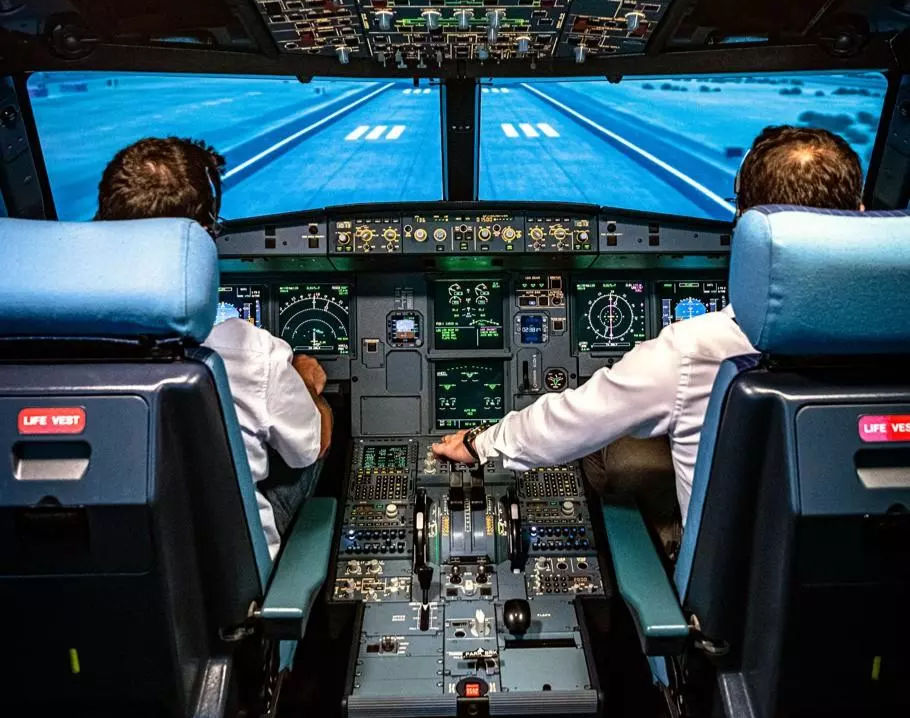
Between 2018 and 2020, Airbus carried out more than 500 test flights with an A350 test aircraft, about 450 of them dedicated to collecting video data to train algorithms, and six specific flight campaigns used to validate fully automatic taxi, take‑off, and landing. In June 2020, the project was formally concluded, having achieved fully automatic, vision‑based autonomous taxi, take‑off, and landing of a commercial aircraft, a world‑first in commercial aviation.
Once the demonstrator phase was complete, ATTOL transitioned from being an end in itself to becoming a technology foundation for future automation and pilot‑assistance functions. Airbus has repeatedly emphasized that the goal is not to remove pilots from the cockpit but to use vision systems, sensor fusion, and advanced algorithms to allow crews to focus more on strategic decision‑making and threat management instead of purely on manual flying and mode management.
In the post‑ATTOL phase, Airbus has been channeling the lessons learned into new demonstrators such as projects led by Airbus UpNext—for example, Optimate, which uses an electric vehicle and an A350 test aircraft to develop and validate autonomous taxiing and advanced position‑sensing tools—and into broader concepts of operations and automated flight rules for higher levels of automation. At the same time, autonomy cannot advance in isolation from regulation: EASA has been issuing pioneering proposals for highly automated and VTOL operations, and ICAO is working on automation maturity methodologies and safe integration of autonomous functions into the air traffic system, while the FAA and other authorities examine impacts on certification, licensing, and operational rules.
By late 2025 and into early 2026, ATTOL is no longer an active standalone program but rather a technology backbone feeding:
Vision-based runway and taxiway detection for low‑visibility taxi, take‑off, and approach;
Enhanced pilot assistance and “virtual copilot” features integrated into FMS and mission systems;
Stepwise autonomy concepts aligned with global efforts on safe automation and future autonomous operations in commercial aviation.
For pilots and operators, the takeaway is clear: the flight tests completed in 2020 were only the opening chapter. The second phase, playing out through the second half of this decade, is about integration and certification—moving from proof‑of‑concept to real operational use, with defined procedures, operational envelopes, training requirements and new cockpit functions, under the oversight of regulators such as EASA and FAA and within the broader framework being developed by ICAO.
Safe flights
Captain Luiz Bassani
Sources
Airbus – Press releases and technical notes on ATTOL and the conclusion of the flight‑test campaign in 2020.
Aviation and technical media summarizing ATTOL objectives, flight‑test numbers and world‑first achievements.
Airbus UpNext / Optimate – Information on follow‑on projects using ATTOL experience to explore autonomous taxi and advanced sensing.
EASA – Initial regulatory frameworks and opinions on advanced automation and VTOL/air‑taxi operations.
ICAO – Papers on future air traffic system (CATS) and automation/autonomy maturity methodologies.
Broader industry CONOPS for automated and autonomous flight rules, used here for context.
Book 1 of the WING OF KNOWLEDGE collection, titled INTRODUCTION TO AVIATION AND THE ROLE OF THE PILOT, has been released on Amazon and is available for online purchase in digital and hardcover (print) formats.

This volume provides a clear and up-to-date perspective on the aviation domain, addressing the evolution of flight, the structure and operation of the aeronautical system, and the role of the pilot in modern aviation. It covers pilot training, certifications, responsibilities, and the challenges posed by the digital and sustainable aviation era. More than an introductory manual, the book establishes the conceptual and operational foundations that underpin the entire collection. It is intended for student pilots, aviation professionals, and enthusiasts who seek a deeper understanding of the pilot’s role within the contemporary aeronautical ecosystem. Please share this information with colleagues so that more people can benefit from this knowledge.
Upcoming release: Book 2 of the WING OF KNOWLEDGE collection, titled HUMAN AND PHYSIOLOGICAL FACTORS IN FLIGHT SAFETY.

Comentários